Flat Stock
Cardboard
The cheapest form of fatstock is cardboard and it is a great starting point for vetting a design idea. In many cases you can get cardboard for free, whether from home, or from one of the many shipping docs at engineering. Cardboard is very useful for getting a sense for both the size of an object as well as how it acts in space. It is often possible to simplify a design down to a simpler model to test a given mechanism. Below is an example of how a team utilized cardboard to test an early design concept that eventually turned into their final design after some iteration and adjustment.
Design for an alternate propulsion system for a quadriplegic rider.
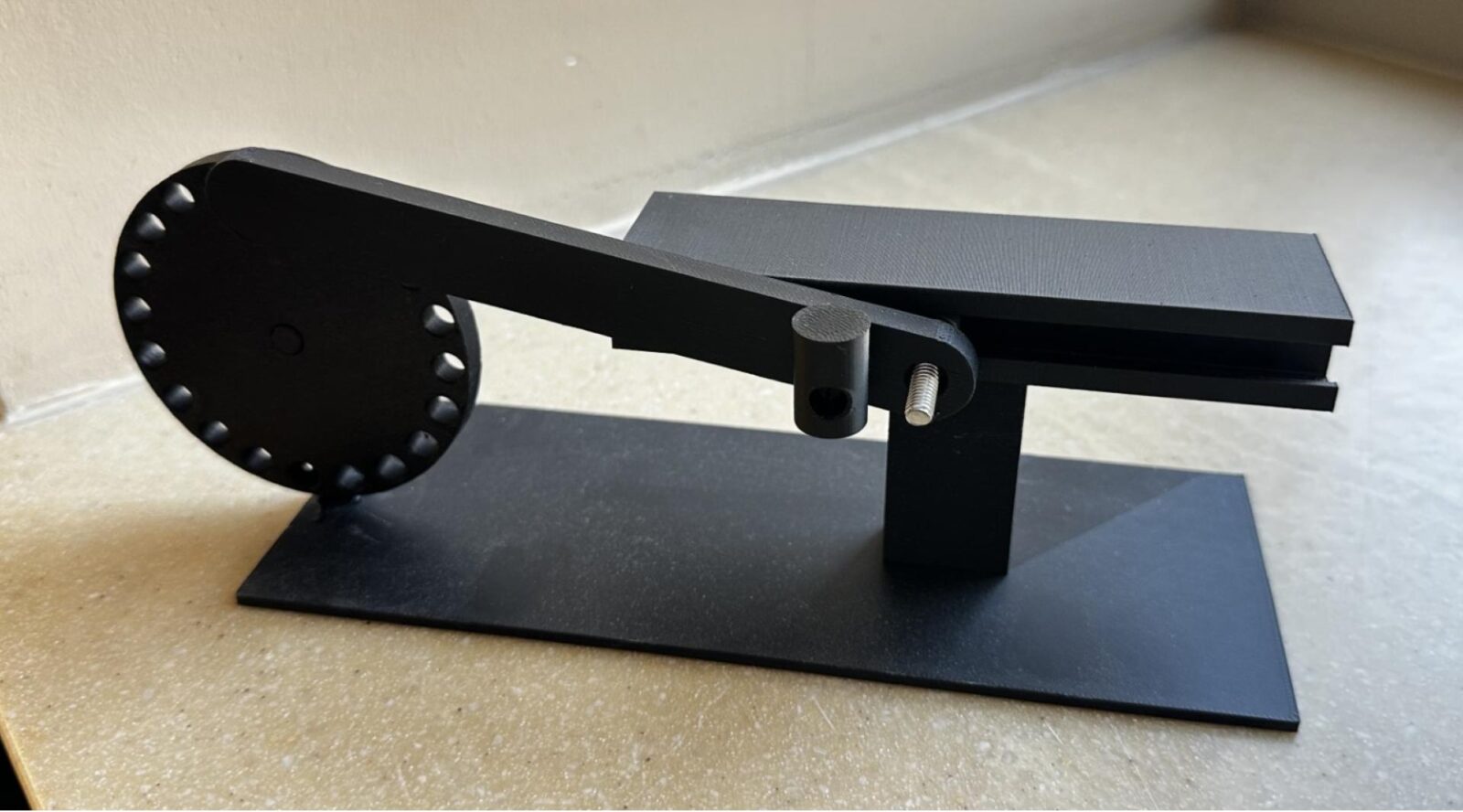
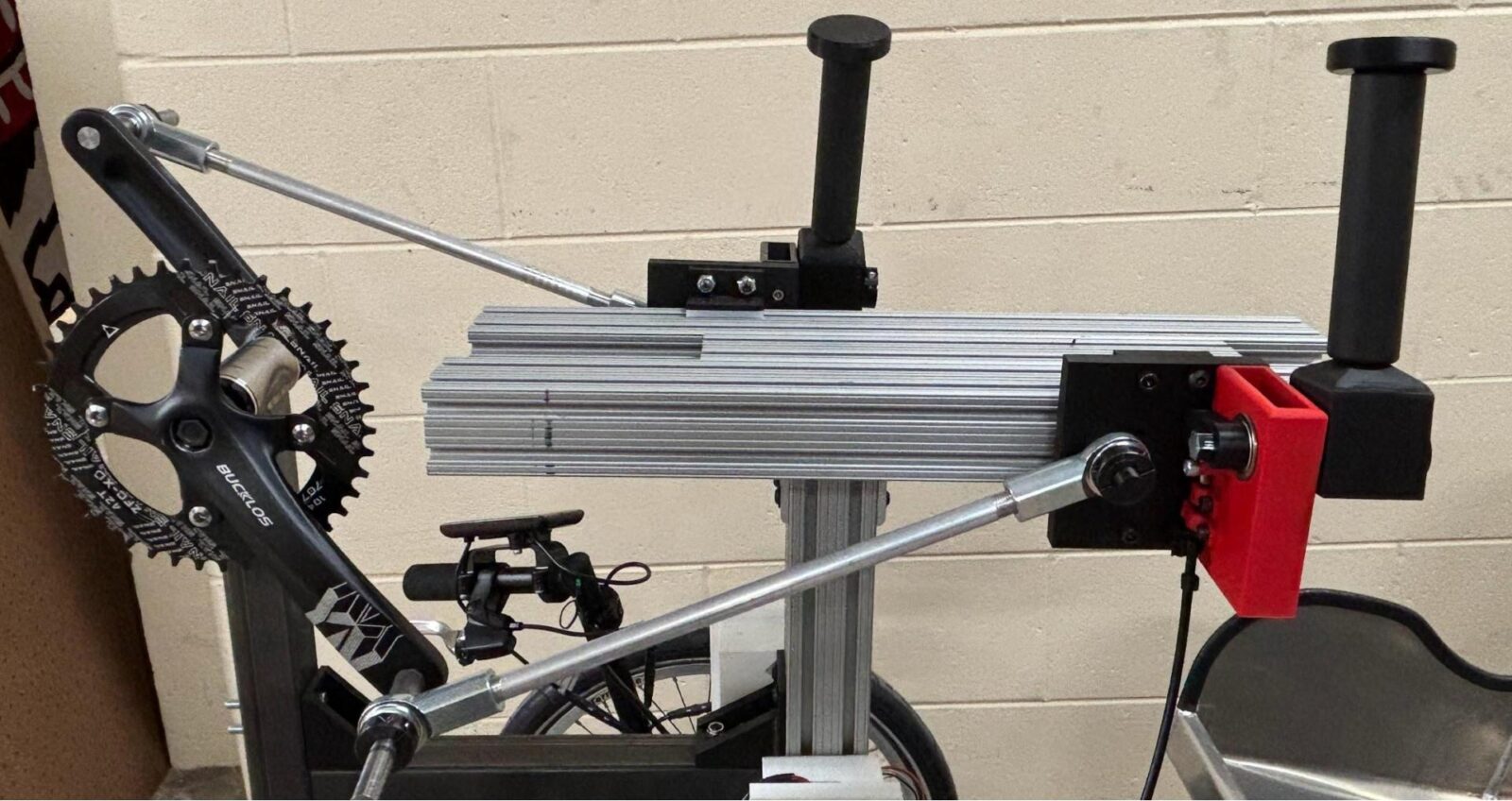
This team worked on modifying a recumbent tricycle so that a quadriplegic rider could control the tricycle on his own. The images depict some of the development for the propulsion system that allows for the rider to utilize their limited mobility to push the trike forward. The leftmost image is an early low fidelity prototype that utilized cardboard, wire, and tape to ensure the proposed solution was feasible. This early prototype broke the system down into a simple 2D version that could then be made using flat stock. After the design was shown to work the team then moved into CAD and created a more complex model that was eventually 3D printed and can be seen in the middle image. This more advanced model uncovered an issue with a dead zone in which the propulsion system would become stuck and unable to move forward or backward. This issue was addressed and eventually became what can be seen in the final deliverable.
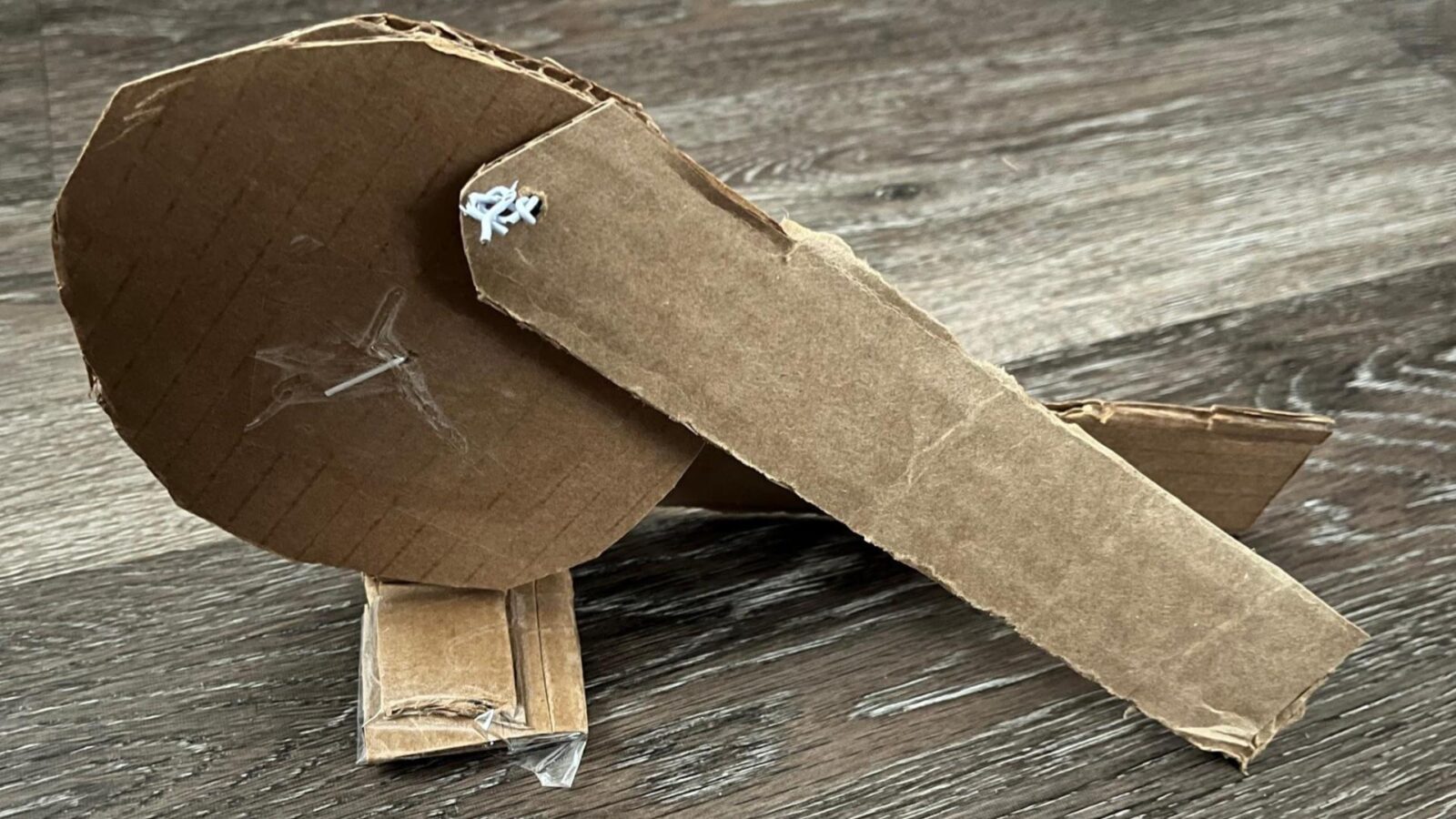
Lo-Fi Cardboard Prototype V1
3D Print Prototype V2
Final Deliverable: Working Prototype
For more examples on how cardboard can be manipulated and used in creating prototypes check out:
Foamcore
Foamcore is very similar to cardboard in that it is relatively cheap and easy to manipulate/form into shapes and objects with limited time and tools. However foamcore is known for looking a bit more polished/cleaner. It is very useful when creating looks-like prototypes that focus on the shape and feel of a given design. With a little bit of glue, time, and cutting you are able to create almost any shape needed. For more info on how to shape and use foamcore check out the Youtube creator Eric Strebel.
Laser Cutter
The laser cutter is almost like the older sibling of foamcore and cardboard, as it is often much stronger and more rigid. The laser cutter is often used to cut acrylic and fiberboard which is where the strength comes from. A laser cutter can be used in many of the same ways as a 3D printer with the exception that all parts must be flat. The main benefit to the laser cutter is how quickly it can create a part as a given part can be finished in minutes rather than hours. Many complex mechanisms can be broken down into a simpler 2D form that can in turn be cut out on a laser cutter. This paired with the fast cut times leads to the ability to proof a design idea much faster. Additionally, many teams finish their project at this stage of design, with numerous examples pairing both 3D printed and laser cut parts in their final deliverable.